Data quality tools tell you when a rule is broken. They don’t tell you why it broke, when the problem started, which downstream systems are affected or whether anyone will be alerted before the issue reaches a report, a model or a regulator.
That gap — between knowing a rule failed and understanding what actually happened — is what data observability is designed to close.
The shift from data quality checking to data observability is not a technical refinement. It is a change in posture. Quality checks are reactive; observability is investigative. Quality tells you a number is wrong; observability tells you the upstream table that fed it changed its schema three days ago and nobody noticed.
Organizations that treat these as equivalent are leaving themselves exposed to silent data failures; in other words, AI systems trained on degraded inputs and audit findings that could have been caught weeks earlier.
However, the organizations investing in a genuine data observability platform — defined as a system that provides the ability to understand, diagnose and improve the health of data throughout its lifecycle using automated monitoring, alerting and diagnostic tools — are building a fundamentally different relationship with their data.
Data quality vs. data observability: a necessary distinction
Data quality and data observability are related but not interchangeable. Understanding the difference is the prerequisite for knowing what you actually need.
Data quality management defines rules — a field must not be null, a value must fall within a valid range, a record count must match across systems — and tests whether data meets those rules. It is rules-based and deterministic. It is excellent at catching known violations of known expectations.
What it cannot do is detect the unexpected. When a schema changes silently, there is no DQ rule for it unless someone wrote one in advance. When data volume drops by 30% because an upstream feed is delayed, a completeness rule will catch it only if the threshold was calibrated correctly. When a distribution shifts — values clustering at the low end of a range where they previously spread evenly — no DQ rule fires unless someone anticipated that pattern.
Data observability fills this gap. It applies anomaly detection — statistical and ML-based — to identify changes in data behavior that no rule would catch. It tracks schema evolution automatically. It monitors volume trends and flags unexpected deviations. It preserves and surfaces lineage so that when something goes wrong, the impact can be traced downstream and the cause can be traced upstream.
The practical summary: DQ catches whether data meets rules. Observability catches unexpected changes, and tells you when, where and why.
The five pillars of data observability
The five-pillar framework, widely associated with Monte Carlo and broadly adopted in the industry, provides a useful structure for thinking about what comprehensive observability covers. It includes:
- Freshness
- Volume
- Distribution
- Schema
- Lineage
Freshness tracks whether data is arriving on schedule. Stale data is often invisible to quality checks — a dataset that contains no violations but was last updated 72 hours ago when it should update hourly is a real problem that freshness monitoring surfaces immediately.
Volume monitors whether expected record counts are arriving. Drops in volume indicate upstream failures. Unexpected spikes may indicate duplicates, system errors or malicious activity. Neither pattern triggers a rule-based DQ check unless the threshold was set in advance.
Distribution tracks the statistical profile of data values over time. A field that previously ranged from 1 to 1000 now contains values clustering between 1 and 10. A category that accounted for 40% of records is now at 5%. Distribution monitoring detects these shifts — which may indicate upstream process changes, data entry errors or model-breaking input changes — without requiring predefined rules for every possible scenario.
Schema monitors structural changes to data assets. Column additions, removals, renames and type changes are among the most common causes of downstream data failures. Automated schema monitoring catches these changes the moment they occur and alerts affected consumers before they discover the breakage themselves.
Lineage provides the causal map that makes the other four pillars actionable. When a freshness alert fires, lineage shows which upstream systems feed the affected table. When a volume drop occurs, lineage reveals which downstream reports and models are now at risk. Without lineage, observability produces alerts without context. With lineage, it produces actionable intelligence.
Why simple DQ checks are not enough
The limitations of rule-based DQ are not a flaw in the tools.
They are a structural limitation of the approach. Rules can only catch what they were designed to catch. In a complex, dynamic data environment, nobody can write rules for every failure mode in advance.
Consider what this means in practice. A pipeline is modified by an upstream team and the data arrives with a new field that replaces two existing fields. No DQ rule fires. The existing fields are no longer populated, which might be flagged as null violations, but only if the nullable threshold was set to zero. The downstream model that depended on one of those fields now silently receives nulls or errors. The model’s performance degrades. Nobody connects the degradation to the upstream schema change because the lineage is not visible.
This is not a hypothetical. It’s a routine failure mode in organizations that rely on static DQ rules as their primary data reliability mechanism.
Observability — schema monitoring, lineage tracking and anomaly detection working together — would have surfaced this failure at the moment of the schema change, not weeks later when someone noticed the model was underperforming.
Anomaly detection: catching what rules miss
ML-based anomaly detection is the capability that separates observability platforms from enhanced DQ tools. Rather than testing data against predefined thresholds, anomaly detection learns the baseline behavior of data assets — their normal volume range, their expected distribution, their typical arrival patterns — and flags deviations from that baseline.
This approach is powerful because it does not require advance knowledge of what can go wrong. It establishes what normal looks like and surfaces anything that departs from it. A 15% volume drop that occurs predictably on weekends is not an anomaly. A 15% volume drop on a Tuesday is. Anomaly detection, calibrated correctly, knows the difference.
The practical implication for data teams is significant: rather than maintaining an ever-growing library of static DQ rules — and accepting that everything not covered by a rule is invisible — they can rely on anomaly detection to provide a continuous safety net for the unexpected.
Health scores: a continuous, actionable signal
One of the most valuable outputs of a data observability platform is the data health score — a continuously updated, asset-level indicator of whether a data asset is behaving within expected parameters across all five pillars.
Health scores translate the complexity of observability monitoring into a signal that business users, data owners and executives can act on. Rather than sifting through alert queues or DQ dashboards, a data owner can see at a glance that a critical dataset’s health score has dropped from 94 to 71 over the past 48 hours — and drill in to understand which pillar is driving the degradation.
Health scores also create accountability. When data quality is measured as a point-in-time rule pass/fail, ownership is diffuse. When it is measured as a continuous score associated with a specific asset and owner, accountability becomes concrete and visible.
The AI reliability connection
AI systems are particularly vulnerable to silent data changes. A supervised learning model trained on 18 months of data and deployed in production is not automatically resilient to changes in the data it receives at inference time. If the input distribution shifts — because an upstream system changed, because a source was modified or because a new data entry process introduced systematic errors — the model’s outputs may degrade significantly without any error being thrown.
This is the AI reliability gap: the space between the data the model was designed to consume and the data it is actually receiving. Observability closes this gap by monitoring the data flowing into AI systems with the same rigor applied to any other data asset: tracking volume, distribution, schema and freshness, and alerting when something deviates from the pattern the model was trained on.
For organizations where AI is driving real business decisions, this is not optional. A credit scoring model consuming data whose distribution has shifted materially from training is not just less accurate; it is potentially producing outputs that no human has validated under the current input regime.
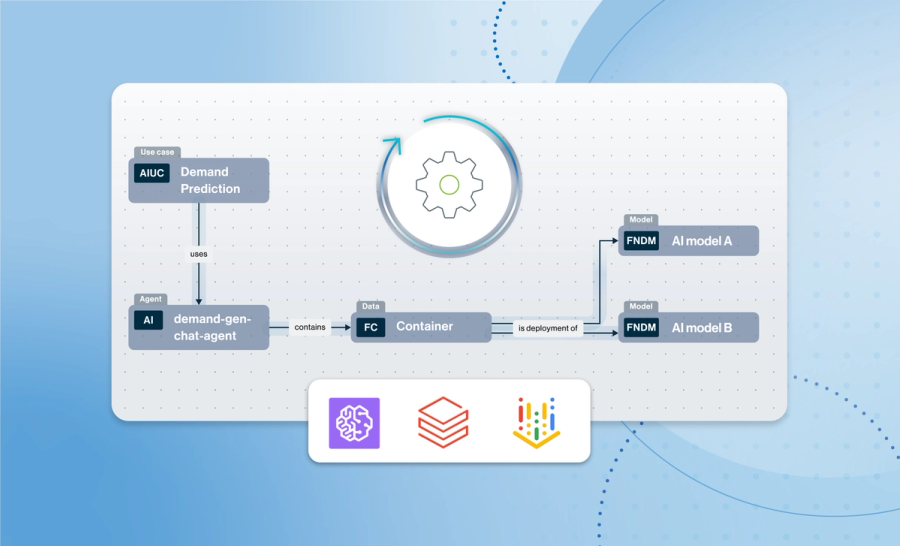
Collibra Data Lineage connects the observability layer to the AI layer, making it possible to trace a model’s inputs upstream and a data change’s consequences downstream, so that AI reliability is managed as part of the broader data health picture.
The regulatory connection
Auditors and regulators are increasingly sophisticated about data. BCBS 239, Solvency II and the EU AI Act all contain requirements that imply continuous data health monitoring, not just periodic evidence of rule compliance.
What auditors increasingly want to see is not a DQ report run the week before the audit. They want evidence of ongoing monitoring: that data health has been tracked continuously, that anomalies have been detected and addressed promptly and that the data underpinning regulatory reports has been reliable across the full reporting period. That evidence cannot be produced retroactively from periodic checks. It must be generated continuously by a monitoring platform.
A data observability platform provides this evidence as a byproduct of normal operations. Every health check, every anomaly alert and every resolution creates an audit-ready record of data oversight that satisfies regulators’ expectations for continuous control, not just point-in-time compliance.
What a data observability platform should do: a capabilities checklist
An enterprise-grade data observability platform should deliver the following capabilities:
- Automated monitoring across all five pillars (freshness, volume, distribution, schema and lineage) without requiring manual rule configuration for every asset
- ML-based anomaly detection that learns baseline behavior and flags deviations without static thresholds
- End-to-end data lineage that connects observability alerts to upstream causes and downstream impacts
- Asset-level health scores that give data owners a continuous, actionable signal
- Intelligent alerting that routes the right information to the right owner with enough context to act — and suppresses false positives that generate fatigue
- Integration with existing data stack components: warehouses, lakes, transformation tools, BI platforms and AI/ML infrastructure
- Audit-ready reporting that produces evidence of continuous monitoring for regulatory and compliance purposes
- Governance integration — connecting observability to the data catalog, policy framework and ownership registry so that every alert has a documented owner and resolution path
How Collibra Data Quality & Observability addresses this
Collibra Data Quality & Observability provides the monitoring, anomaly detection and health scoring capabilities that define a genuine observability platform — integrated with the Collibra Data Catalog and lineage graph so that observability alerts carry full business context.
The integration with Collibra Data Governance ensures that data health is connected to accountability: every asset has a documented owner, every alert has a resolution path and every health trend is visible to the people responsible for the data assets that drive the business.
Frequently asked questions about data observability platforms
What is the difference between a data observability platform and a data quality tool?
Data quality tools test data against predefined rules and flag violations. Data observability platforms monitor data behavior continuously — including freshness, volume, distribution and schema changes — and use anomaly detection to surface unexpected issues that no rule was written for. Observability also provides lineage context so that alerts can be traced to causes and downstream impacts. The two capabilities complement each other; neither alone is sufficient.
Do we need a separate observability platform if we already have DQ checks?
If your DQ checks cover all the failure modes in your environment — including unexpected schema changes, volume anomalies and distribution shifts — you may have limited gaps. In practice, DQ rules cannot anticipate every failure mode in a complex, changing data environment. Observability adds the anomaly detection and schema monitoring layer that rules-based checking cannot provide.
How does data observability support AI reliability?
AI models depend on consistent, high-quality input data. When the data feeding a model changes — in volume, distribution or schema — the model’s outputs may degrade without any system error being raised. Observability monitors the data flowing into AI systems the same way it monitors any other data asset, alerting teams when input data deviates from the patterns the model was trained on.
What data sources can a data observability platform monitor?
Modern observability platforms support monitoring across cloud data warehouses (Snowflake, BigQuery, Databricks), data lakes, relational databases, streaming sources and BI layers. The key requirement is that the platform can access the metadata — and ideally the data profiles — of the assets being monitored without requiring full data extraction.
How is data observability different from data monitoring?
Data monitoring is a broad term for tracking data metrics over time. Observability is a specific approach that combines monitoring with the ability to diagnose issues — not just surface that something is wrong but enable teams to understand why, when and what the blast radius is. Observability implies lineage, context and diagnostic capability, not just alert generation.
Collibra helps data teams, CDOs and heads of engineering build the confidence that data reliability demands — at scale, across the full data estate.
Discover Collibra Data Quality & Observability and learn how a genuine data observability platform closes the gaps that rule-based quality checks leave open.

Collibra
Collibra
Enterprise AI Control Plane