As AI moves from isolated use cases into real operational environments, a new limitation becomes visible. It is no longer about whether systems can generate answers, but whether they understand where those answers are being applied. Large language models have dramatically improved how we interact with information. They can explain, summarize, and guide. But once they are placed inside real business workflows—interacting with data, tools, and processes—their limitations become clearer. They operate on representations of systems, not on the systems themselves. And those systems are not abstract. They are real-world, evolving, and governed environments where decisions have consequences.
What LLMs actually understand
LLMs are designed to interpret language, not real-world systems. Their strength lies in pattern recognition across text, which allows them to produce outputs that feel coherent and relevant. They can describe how a system should work and provide guidance that aligns with general best practices. But this remains an approximation. They do not inherently know how your organization structures its data, which datasets are trusted, or how processes are orchestrated across teams. They do not know what has changed yesterday, what is deprecated, or what is restricted. What looks like understanding is often a projection of patterns—not a reflection of reality.
When things go wrong: A simple example
Consider a marketing team using an AI assistant to identify high-value customers for a campaign. The LLM suggests using a customer dataset that looks perfectly valid. It contains purchase history, segmentation fields, and geographic data. From a language perspective, everything checks out. But in reality, two versions of that dataset exist. One is certified, updated daily, and approved for marketing use. The other is an older version, still accessible, but no longer maintained and not compliant with current policies. The LLM selects the wrong one. Nothing breaks. The query runs. The output looks correct. But the campaign is now based on outdated or non-compliant data. This is not a failure of intelligence. It is a failure of context.
The difference between describing and operating
This example illustrates a broader issue. Describing a system is not the same as operating within it. An LLM can explain what a customer dataset should contain, but it does not know which version is authoritative. It can suggest a workflow, but it does not know whether that workflow aligns with internal policies or dependencies. In operational environments, those details matter. Decisions are not made in a vacuum. They depend on trust, ownership, and governance. Without that grounding, outputs may be technically correct, but operationally wrong.
Real-world systems are governed environments
Enterprise systems are not just complex. They are controlled. Data is classified, access is managed, and usage is governed by policies. Some datasets are approved for specific use cases. Others are restricted. Some are continuously monitored. Others are deprecated but still accessible. Understanding such environments requires more than knowing how systems are connected. It requires knowing how they are governed. This layer of control is essential to how organizations operate, yet it is largely invisible to models that rely only on language.
Why this becomes critical with agents
This limitation becomes even more important with the rise of AI agents. Agents are not just generating responses; they are taking action. They select data, trigger workflows, and execute decisions across systems. At that point, the cost of misunderstanding increases significantly. Choosing the wrong dataset is no longer theoretical. It directly impacts business outcomes, compliance, and trust. Agents need more than access to information. They need access to context that is trusted, governed, and continuously monitored.
The missing piece: Trusted and operational context
What is needed is not just context, but context that reflects how real systems operate. That context must be trusted, governed, and monitored. This cannot be inferred from documentation or language alone. It must be structured, maintained, and made available where decisions happen. In other words, context must be operational.
Metadata as the bridge between understanding and control
Metadata provides that foundation. It captures relationships, lineage, ownership, and usage—but also governance signals such as certification, quality, and policy constraints. It makes explicit not only how systems are connected, but how they are controlled. By grounding AI in metadata, organizations enable systems to move from generic reasoning to context-aware decision-making. This is what allows AI to operate not just correctly, but appropriately.
How Collibra helps: Operationalizing trusted context
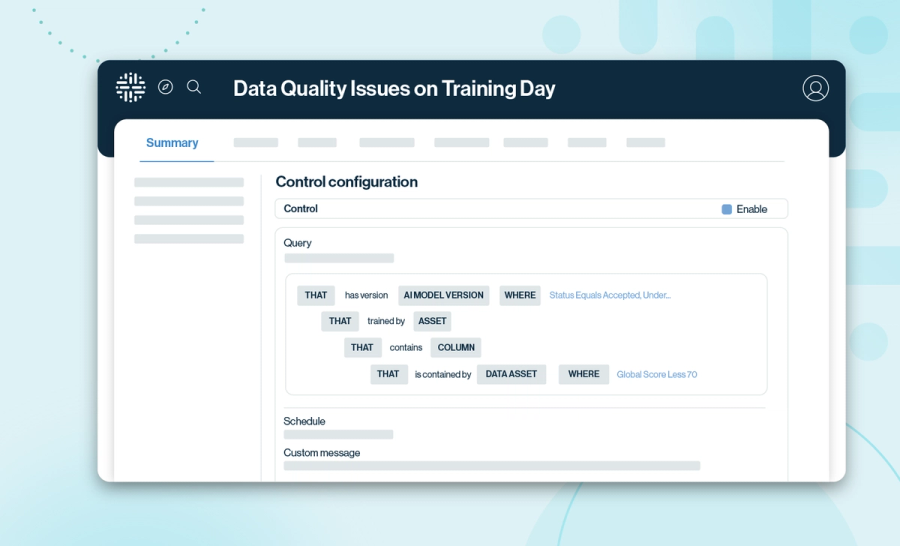
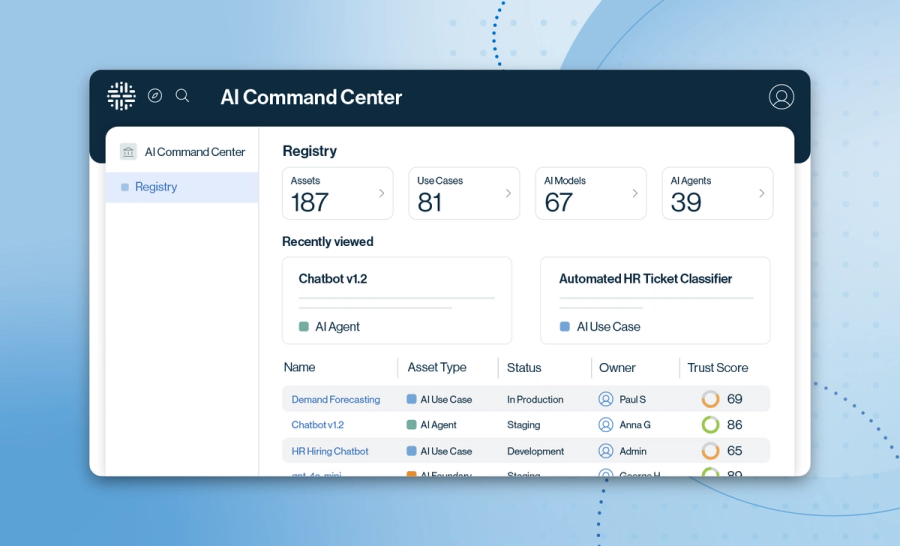
As AI systems become more autonomous, context must be available at the moment decisions are made. Collibra provides the foundation by capturing and maintaining metadata across data, models, and processes, embedding governance directly into how systems are described and managed. Through integrations such as the Model Context Protocol and the Collibra MCP server, available in the Databricks Marketplace, this context becomes accessible within the operational loop of AI systems. AI agents can query context dynamically before acting. They can determine whether a dataset is certified, assess its quality, understand ownership, and evaluate policy constraints in real time. This shifts context from passive documentation to active control.
From language intelligence to controlled system intelligence
The progress of LLMs has changed how we interact with information. But as AI systems take on more responsibility, expectations evolve. It is no longer enough to generate plausible answers. AI must operate within real-world systems that are dynamic, governed, and continuously evolving. This marks a transition from language intelligence to controlled system intelligence—where understanding includes not only relationships, but trust, governance, and oversight.
What comes next
If understanding real-world systems requires trusted and governed context, the next challenge is how that context evolves over time. Because even well-controlled systems change, and maintaining alignment is not a one-time effort. In the next article, we explore why AI systems don’t fail suddenly—but drift gradually. Next: AI Needs Context: Why AI Systems Drift Over Time.

Eric Warner
Eric Warner
Director, AI Engineering
Collibra