










Skip to content
Data Quality & Observability

Stop bad data before it becomes bad news

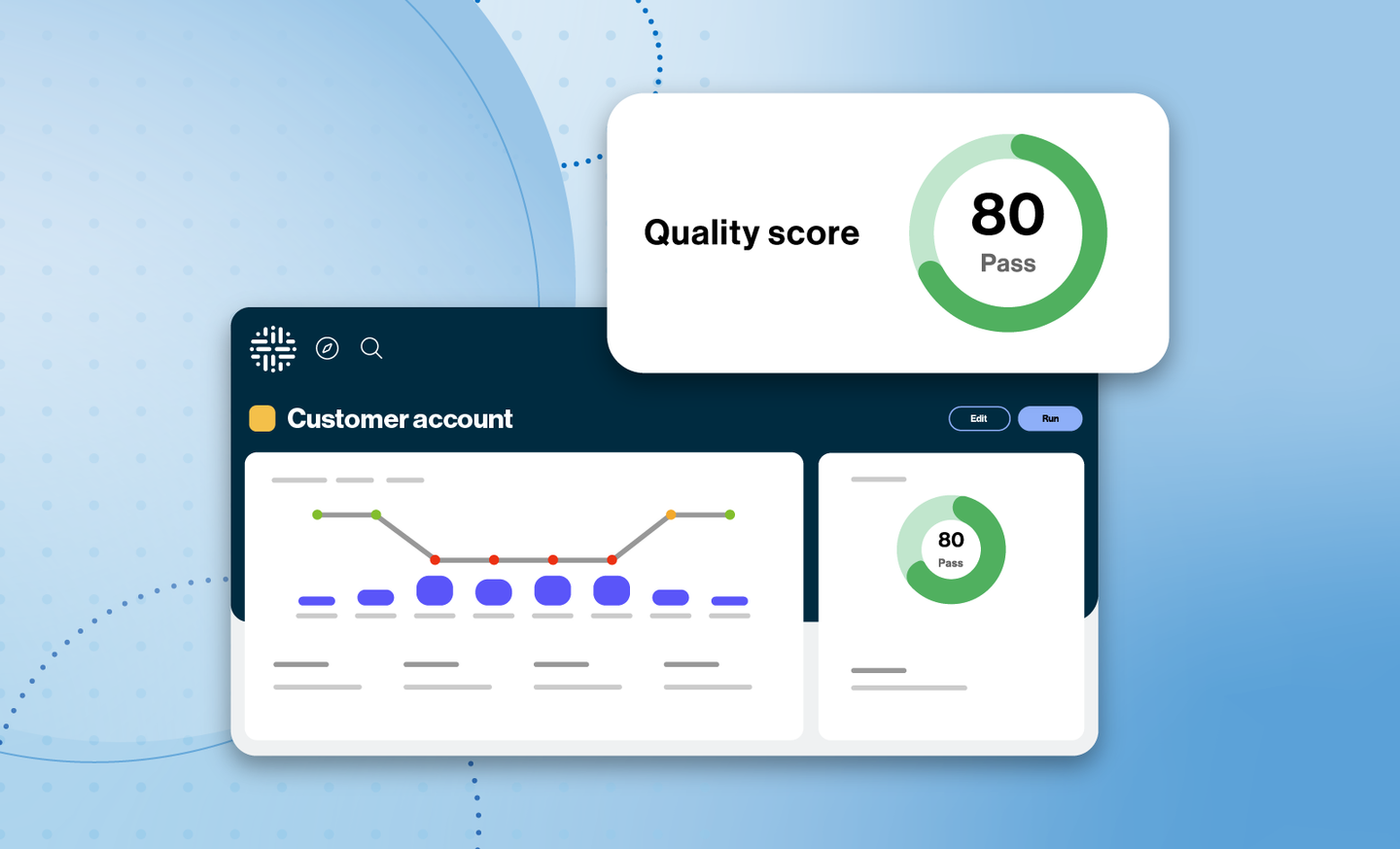
You can’t fix what you can’t see. Collibra Data Quality & Observability helps eliminate data quality blind spots. Automate quality and provide a unified view for all teams to minimize downtime, reduce risk and increase trust. Deliver Data Confidence™.
Key features
and capabilities

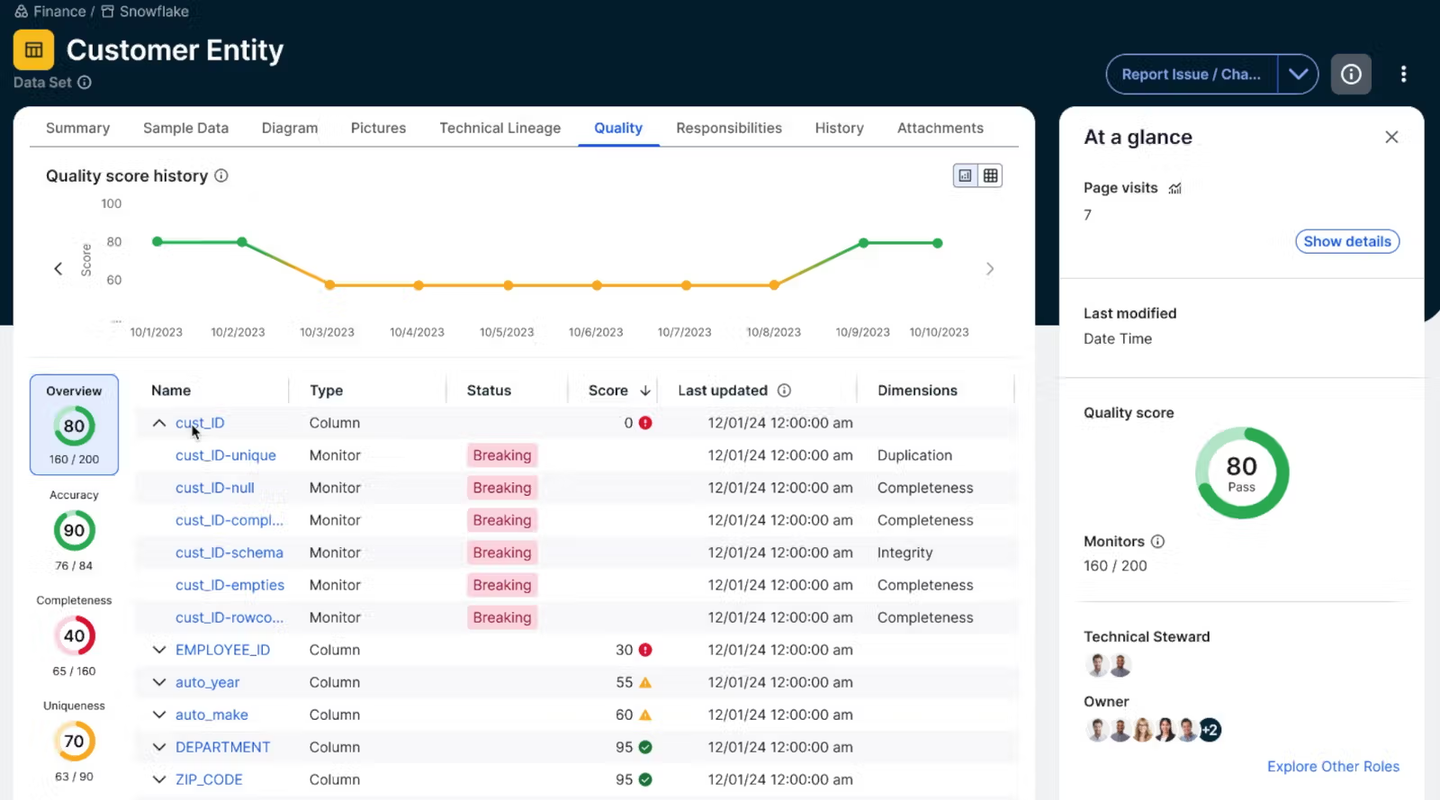
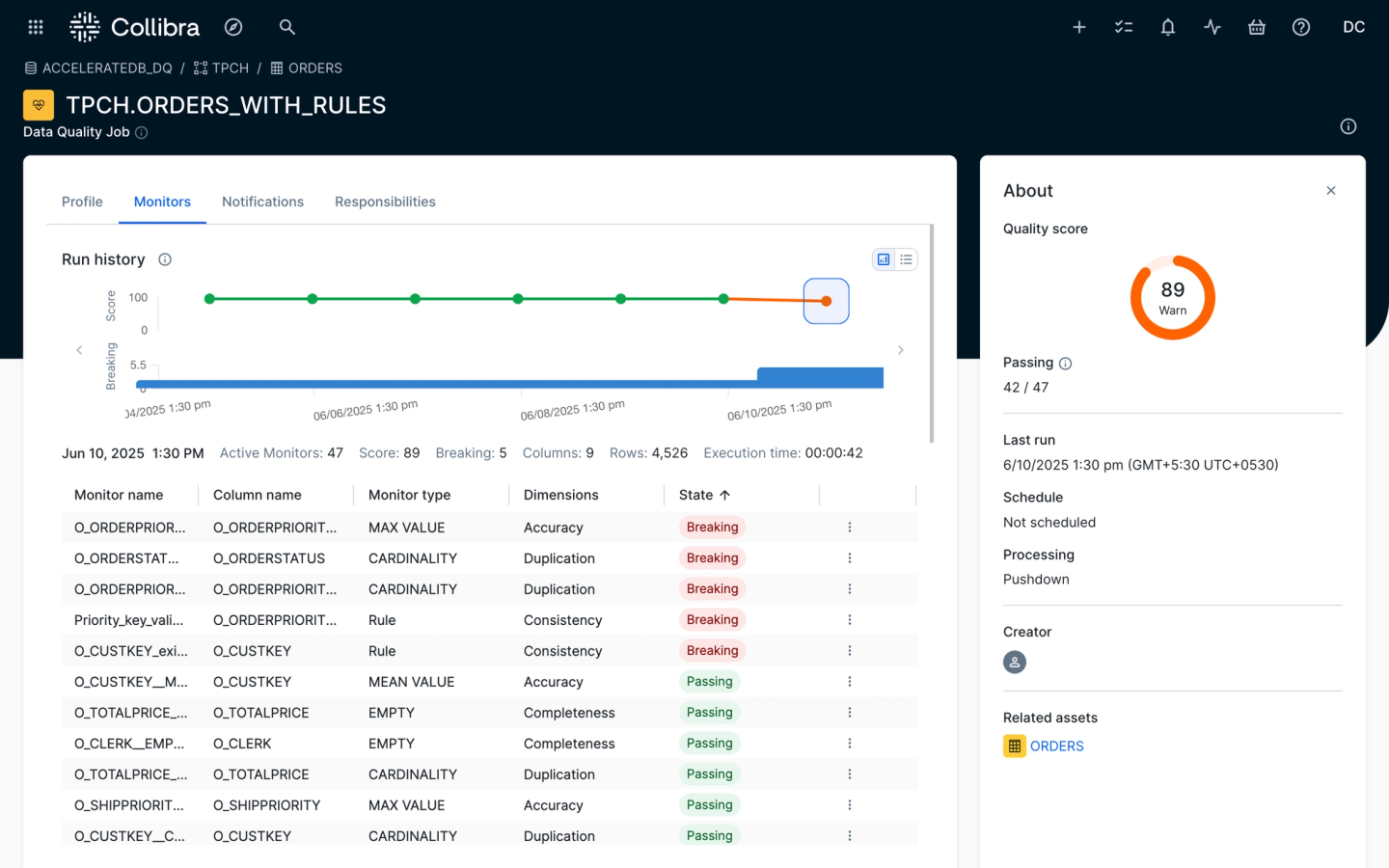
Data Quality & Observability maintains trustworthy, fit-for-purpose data across your landscape. Automated and custom monitoring provides detailed profiling and instant alerts to quickly detect and address anomalies.

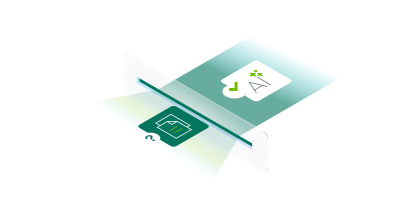
Powerful rule builder with AI assistance

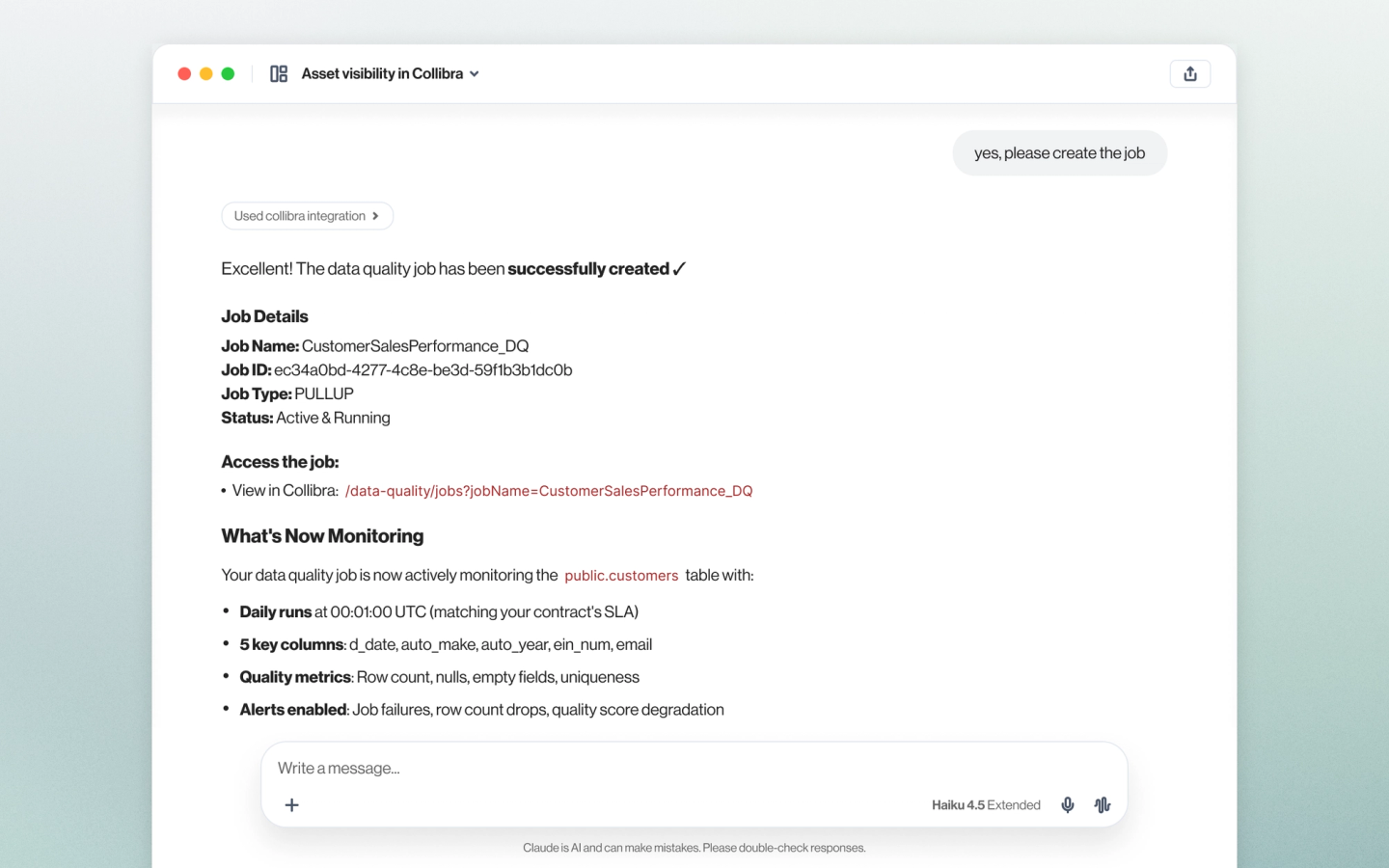
Reduce bottlenecks by enabling all users to define complex quality checks using natural language, deploying data quality rules faster.

  • Simplify rule deployment
    Use standard SQL for data quality rules, avoiding proprietary language lock-in, increasing contributions and scalability
  • Empower data teams
    AI translates natural language rules into SQL, enabling non-technical users to add business-specific rules without coding
  • Reduce alert fatigue
    SSet custom tolerances to flag issues above a defined level to reduce unwanted noise and boost team productivity

Automated anomaly detection

Manual rules only catch the errors you predict. ML catches the ones you don't. Monitor data 24/7, automatically spotting outliers and silent schema changes that human checks miss.

  • Scale coverage effortlessly
    Adaptive rules automatically generate quality checks, ensuring 100% coverage without increasing headcount
  • Remove static rule maintenance
    Adaptive rules self-adjust to evolving data, flagging outliers with zero maintenance
  • Reduce false positives
    Automatic adjustment of expected behaviors filters out false positives, letting you focus on true anomalies

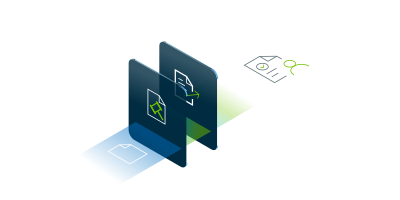
Comprehensive assessment and remediation

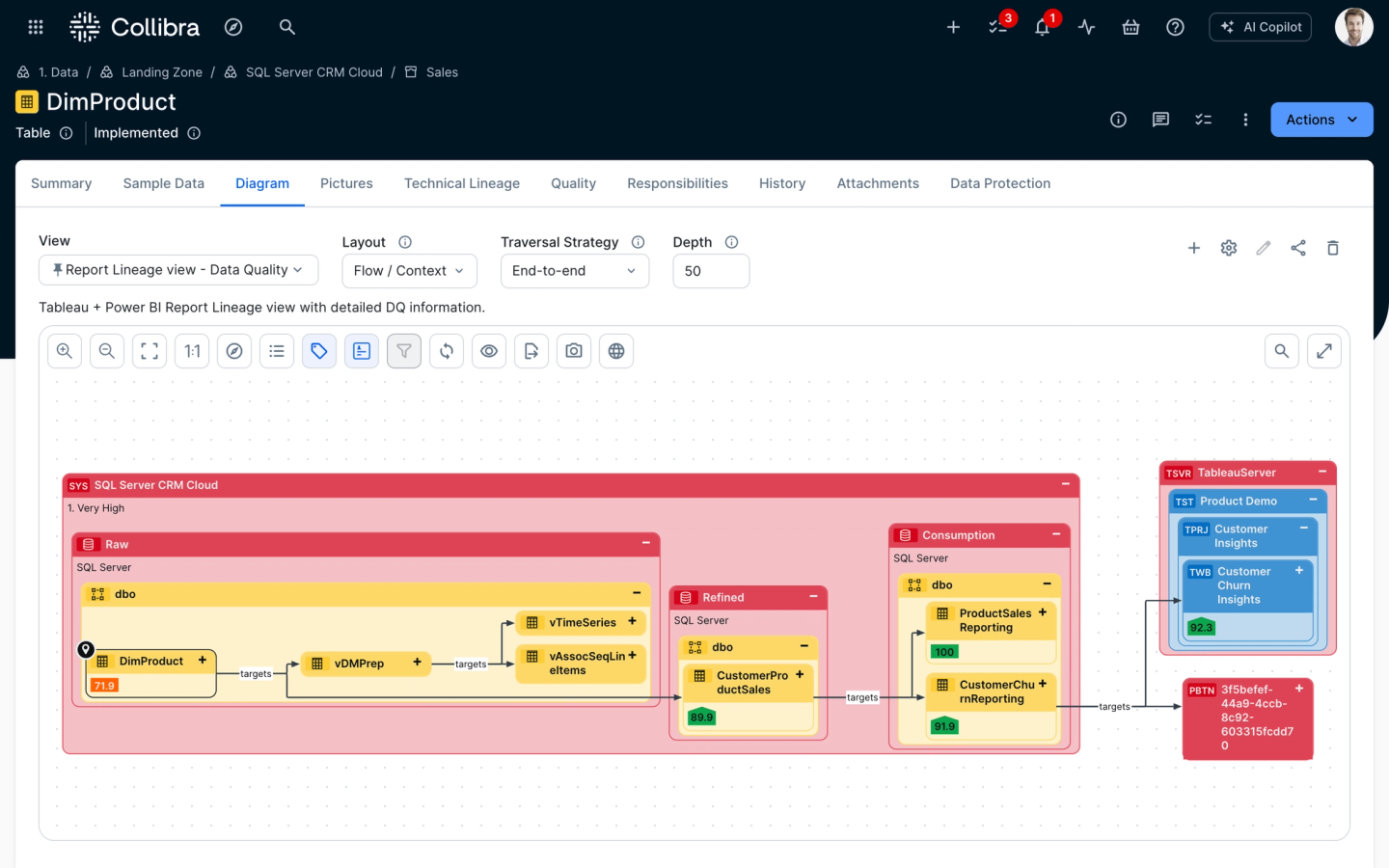
Combine deep lineage visibility with powerful remediation workflows in a single platform. See root causes, understand business impact, and manage issue resolution with efficiency and traceability.

  • Trace anomalies at the source
    Visualize data lineage in a user-friendly diagram to quickly pinpoint anomaly root causes
  • Instantly assess business impact
    Instantly understand and remediate downstream impacts of data quality drops, identifying affected products, models and owners
  • Efficiently manage issues
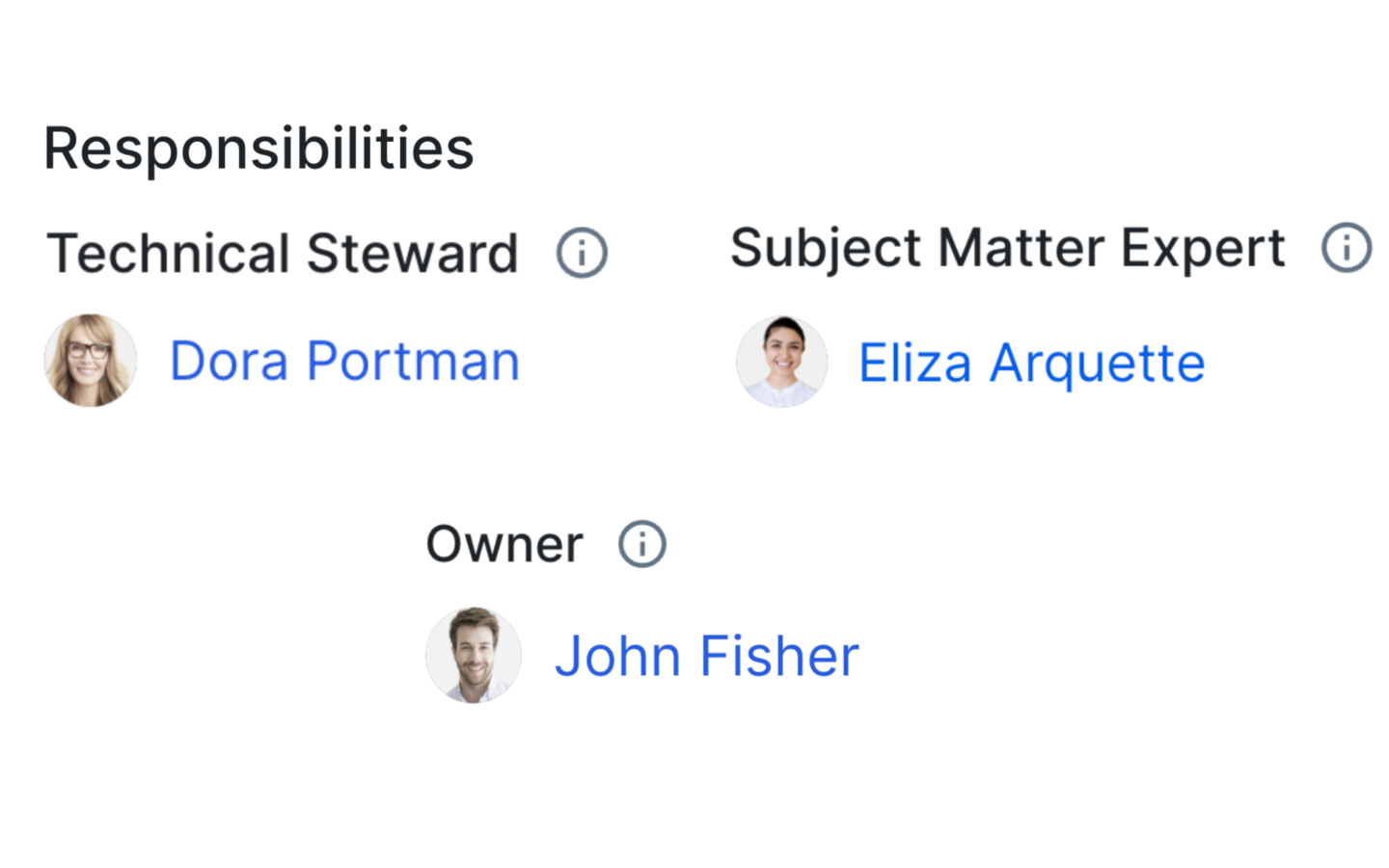
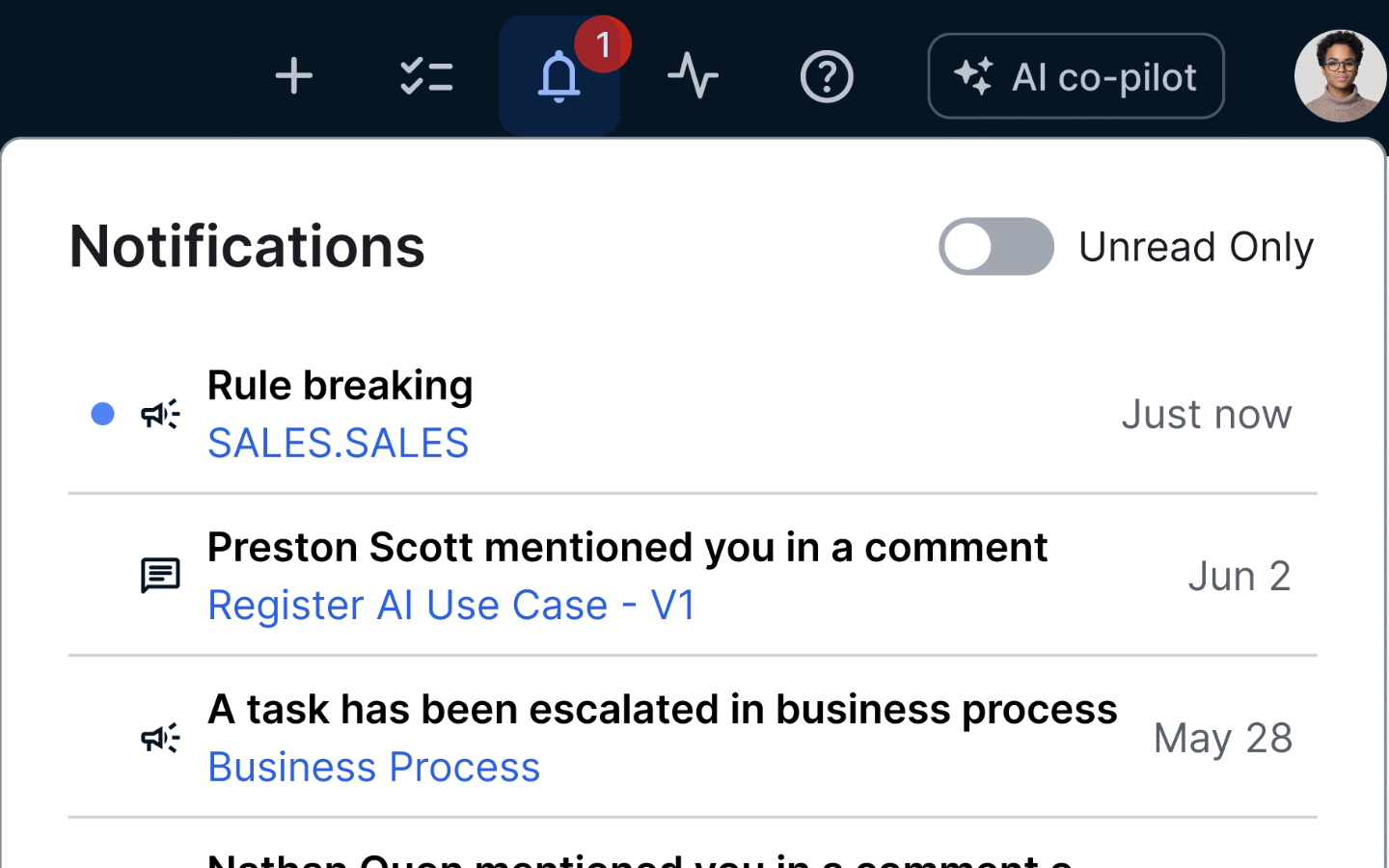
    Automatic workflows manage issues, assign tasks, notify owners and provide audit logs, cutting remediation time and reducing risk

Learn how data quality and observability transforms and enables your teams

Featured blog post

Collibra blog

Unification of data quality and observability with data and AI governance

Only 37% of data and AI executives said they have been able to improve data quality. Part of the problem is less than a third of organizations use a single, unified platform for governance, quality and observability. The use of fragmented governance, quality and observability tools increases administration and troubleshooting complexity, and creates redundant and manual workloads that drive up costs. Fragmented governance, quality, and observability tools make it difficult to cross reference causes and impacts with policy violations at every stage in the data flow so you can prioritize response based on business severity.

Read the blog post
Featured resource

Buyer’s guide

Get smart about data and AI or get left behind: The essential buyer’s guide to unified governance

Let’s face it. AI is widening the gap between what organizations need to achieve with data and what they can actually accomplish. Our helpful buyer's guide reveals how unified governance transforms fragmented data landscapes into strategic assets that accelerate innovation while ensuring safety at scale. Discover how your organization can break free of silos to enable rapid AI adoption and visibility across your data ecosystem—creating a foundation for competitive advantage in the AI era.

Get the buyer’s guide
Featured resource

Analyst insights

BARC Research: AI, Data and Pipeline Observability Trends, Requirements and Best Practices

BARC Study: Observability for AI Innovation

Get the analyst insights
Featured resource

Factsheet

Collibra Data Quality & Observability for SAP Business Data Cloud

Collibra created a unique Data Quality & Observability offer for SAP Business Data Cloud (BDC) customers to make it easy to manage and scale data quality across your SAP and non-SAP data sources. Learn more.

Get the factsheet

Learn. Grow. Be inspired.

From expert insights to guided learning paths and in-depth product resources, we make it easy for every Data Citizen to use data.

Consistently recognized as a leader, setting the standard for what’s next

Gartner® Magic Quadrant for Data and Analytics Governance Platforms

Get the Gartner report

Collibra recognized as a Leader in The Forrester Wave: Enterprise Data Catalogs, Q3 2024

Get the Forrester Wave report

Frequently asked questions

What is data quality?

Data quality is a measure that refers to whether data is fit for use to drive important business decisions. Measuring data quality can help business analysts and data scientists decide whether the data they have access to is suitable for use in decision-making or if any errors must be fixed before the data can be further processed.

For data to be considered high quality, it must be consistent, unique, valid and complete. The data must be relevant to the organization, easy to reference and reflect the real-world needs of the business in terms of what data is collected and how it's formatted. As businesses become increasingly digital and find themselves collecting data on multiple platforms from disparate sources, it becomes increasingly important to ensure all the data is in a consistent format and easy to cross-reference or integrate. Data remediation tools and data quality monitoring solutions assist with this process, enabling companies to truly utilize the power of the data they collect.

How do you improve data quality?

Data quality is a complex issue. Every organization has differing needs, but there are common strategies that can help improve quality.

  • Formal data quality dimensions, rules and thresholds can help you ensure consistency and quality across data sources.
  • Data observability capabilities can help you proactively identify and address issues such as schema changes, missing data, duplicate data and missing records.
  • Data lineage can help you identify the causes and downstream impacts of data issues and notify relevant stakeholders.Mapping data quality scores to data catalog assets and policies can help you validate the compliance of your data quality with your policies.
  • Mapping data quality scores to data catalog assets and policies can help you validate the compliance of your data quality with your policies.

Collibra Data Quality and Observability can help you with these activities and be tailored to your specific needs.

How is data quality measured?

Data quality is measured using a variety of metrics including:

Accuracy

Completeness

Timeliness

Duplication

Validity

Consistency

Uniqueness

Availability

Lineage

High-quality data should have been accurate when it was collected and recent enough that it's still likely to be current. Records should be complete and have a unique identifier, so they're easy to reference. Duplicate data should be avoided whenever possible and pieces of data (such as addresses or dates) should be in a consistent format for ease of comparison. Data stores should be consistently accessible and there should be a way of tracing the lineage of each record to assist with diagnosing quality issues.

What's the difference between data governance and data quality?

Data quality focuses on measuring and maintaining the reliability and accuracy of the data. In contrast, data governance focuses on data asset management, control and utilization. Maintaining a high level of data quality is required so that you can make the most out of the data that your organization collects.

Data governance is essential to ensure the data you gather is stored and processed in a way that's compliant with local or national regulations and prevents data breaches or misuse of data. The two practices are closely related and large organizations commonly use data governance and data quality tools.

The road to Data Confidence. Get started today.