











Skip to content
Data Access
Data Access

Connect the right users to the right data – without delay

Empower data owners to centrally manage masking, filtering and access controls across sources, simplifying compliance and safely enabling analytics and AI initiatives.
Key features
and capabilities

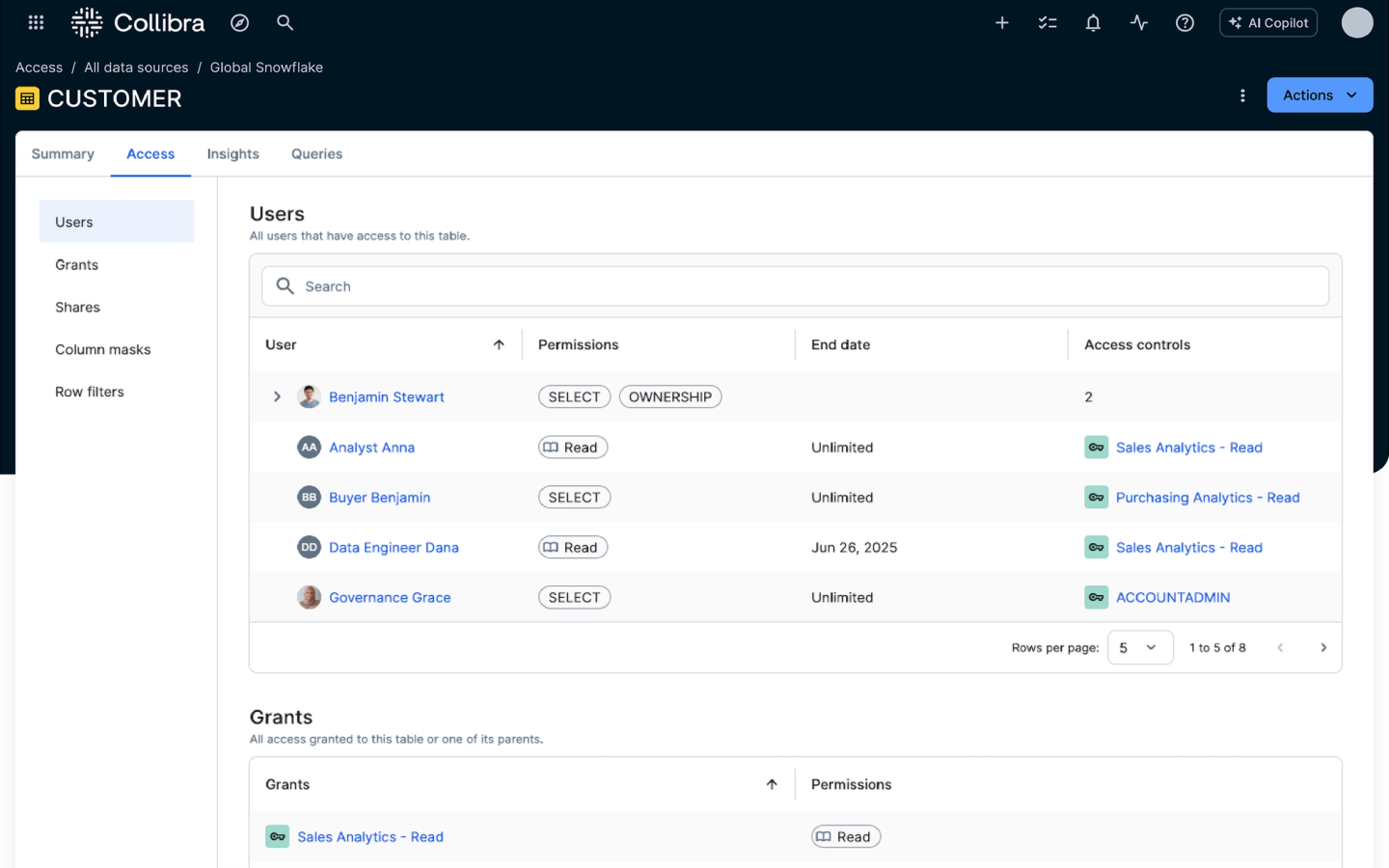
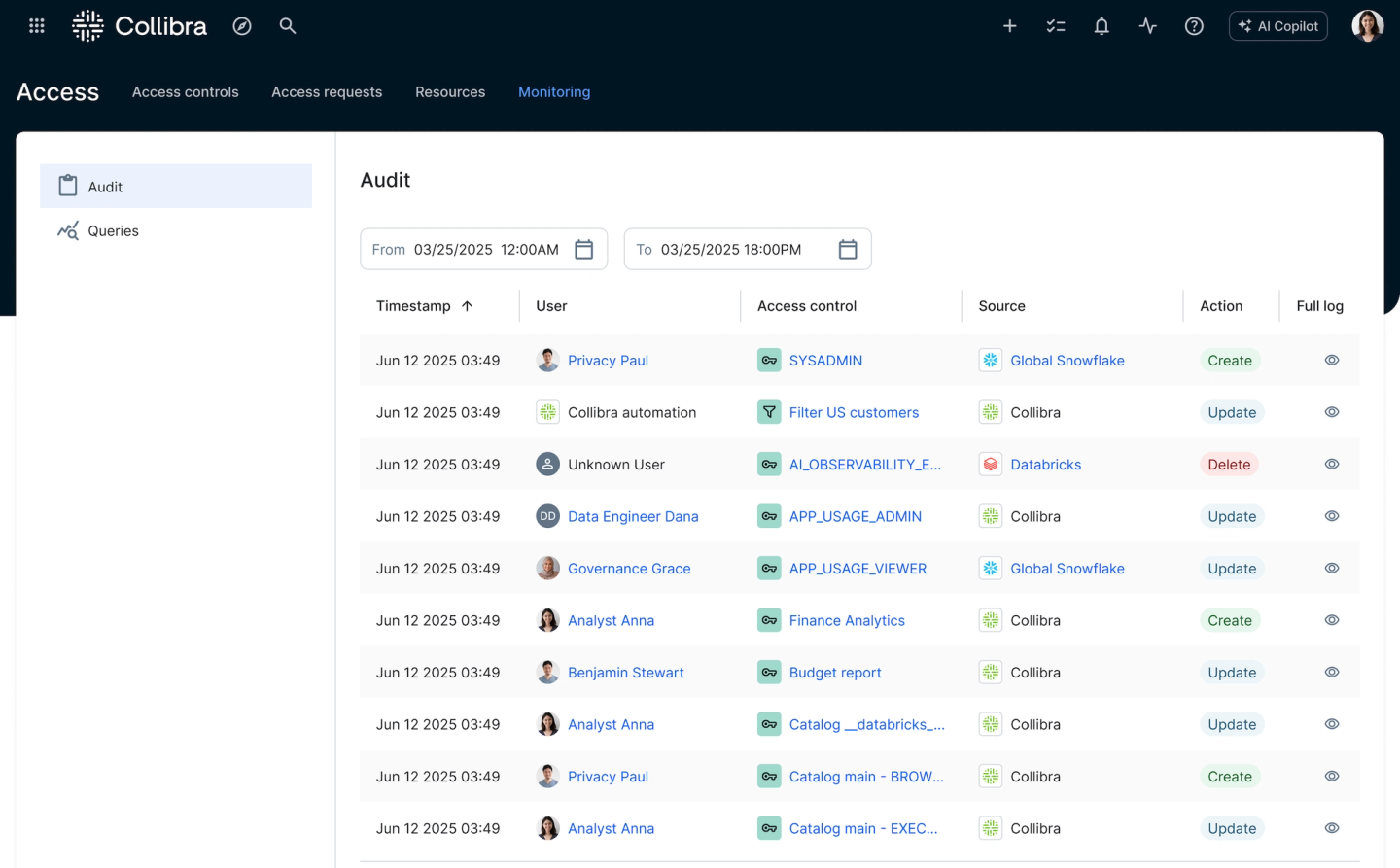
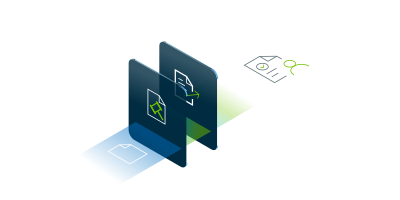
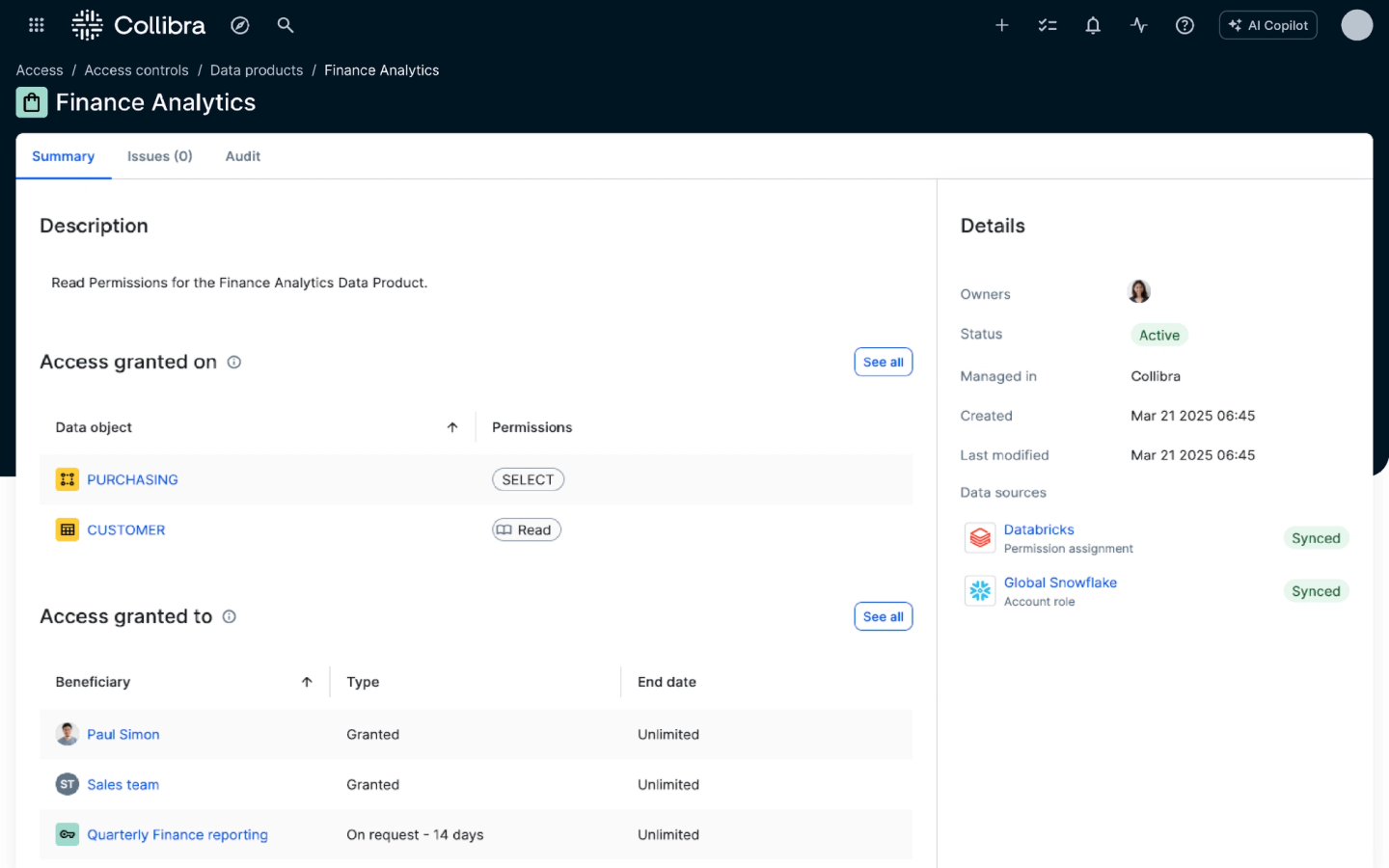
Collibra Data Access centralizes data access management and protection, enabling teams to work efficiently with clear visibility and control.

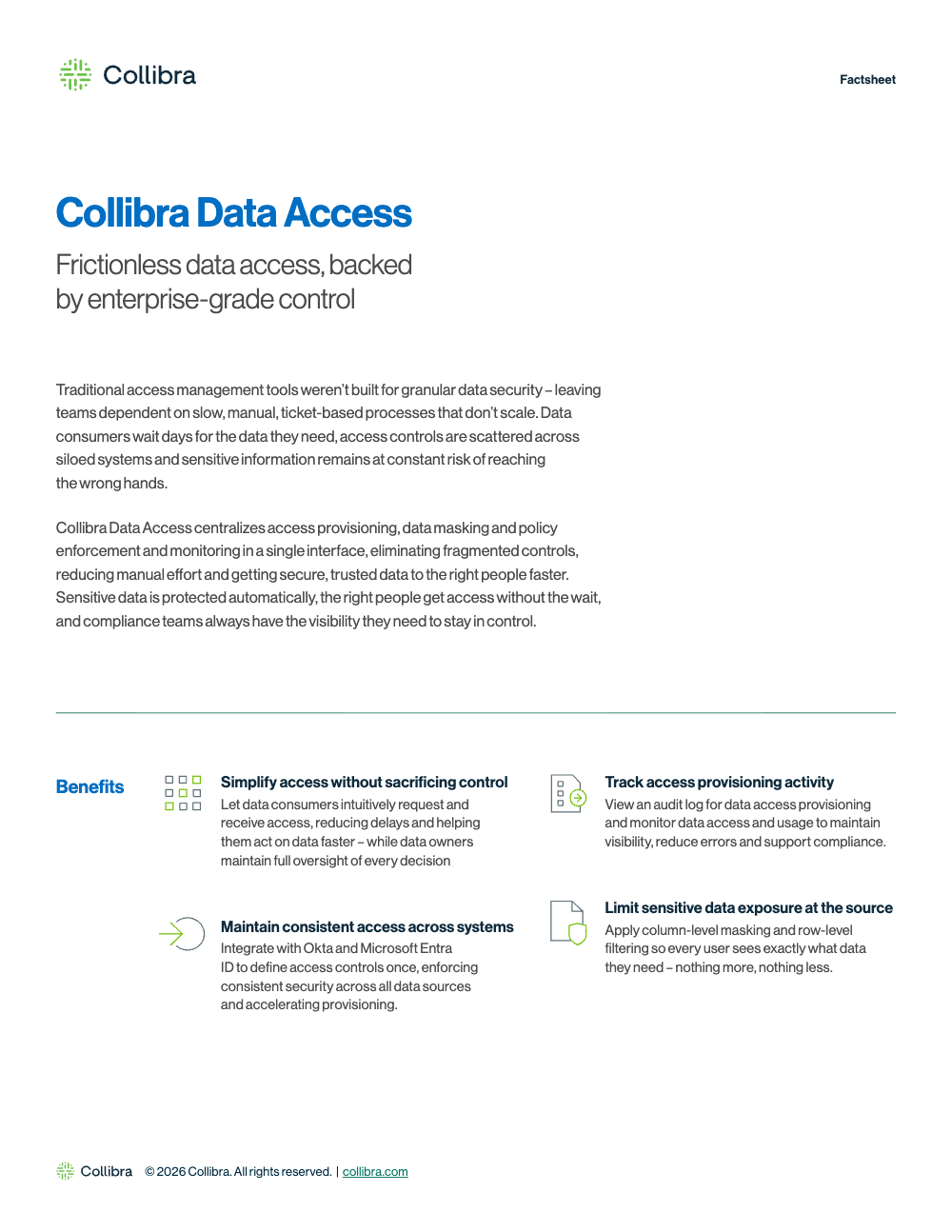
Simplify access without sacrificing control

Save time and maintain oversight by centralizing access controls.

  • Minimize time spent on access management
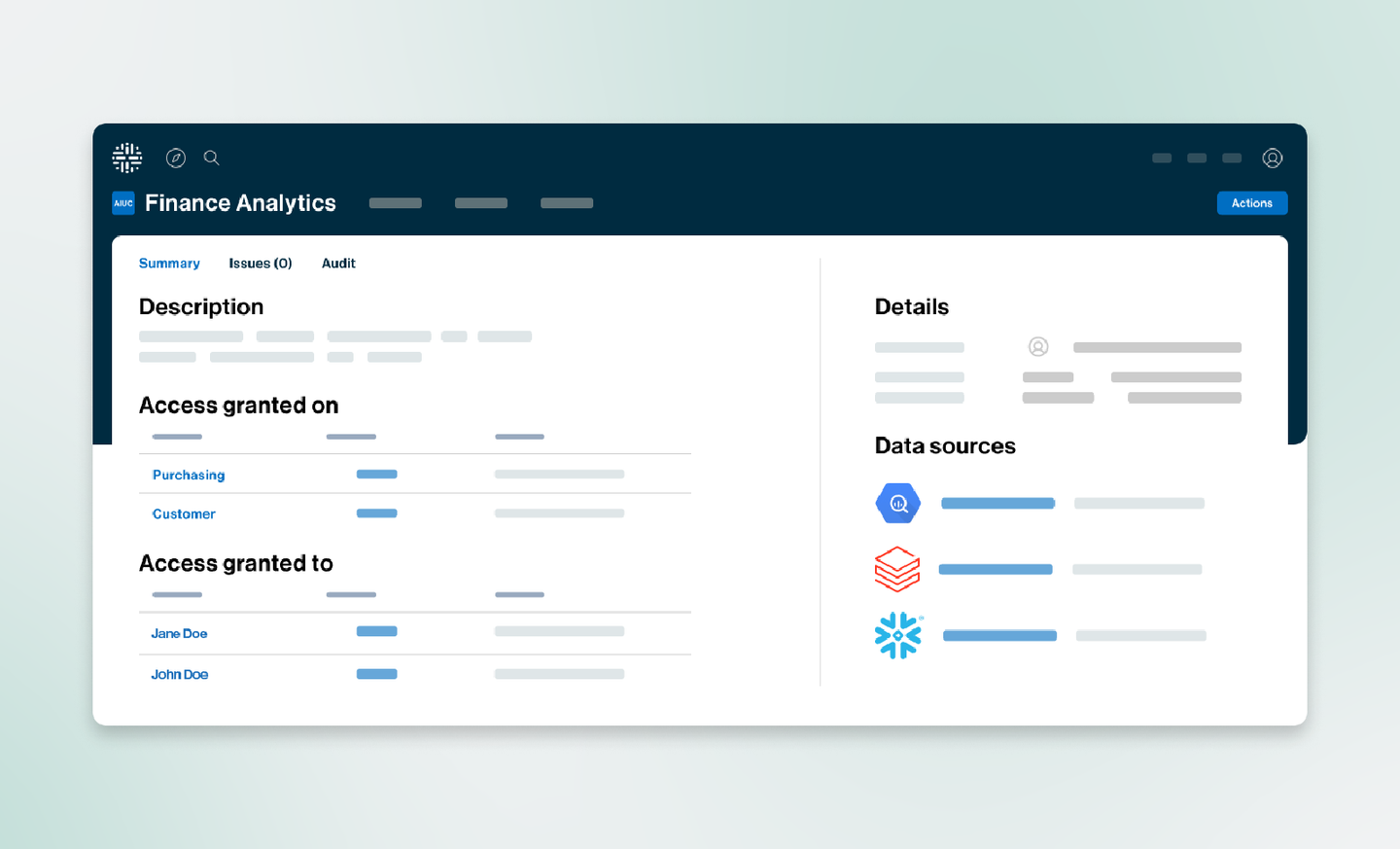
    Reduce effort and improve visibility by managing access requests and provisioning access to data across Snowflake, Databricks and BigQuery
  • Enhance security and compliance
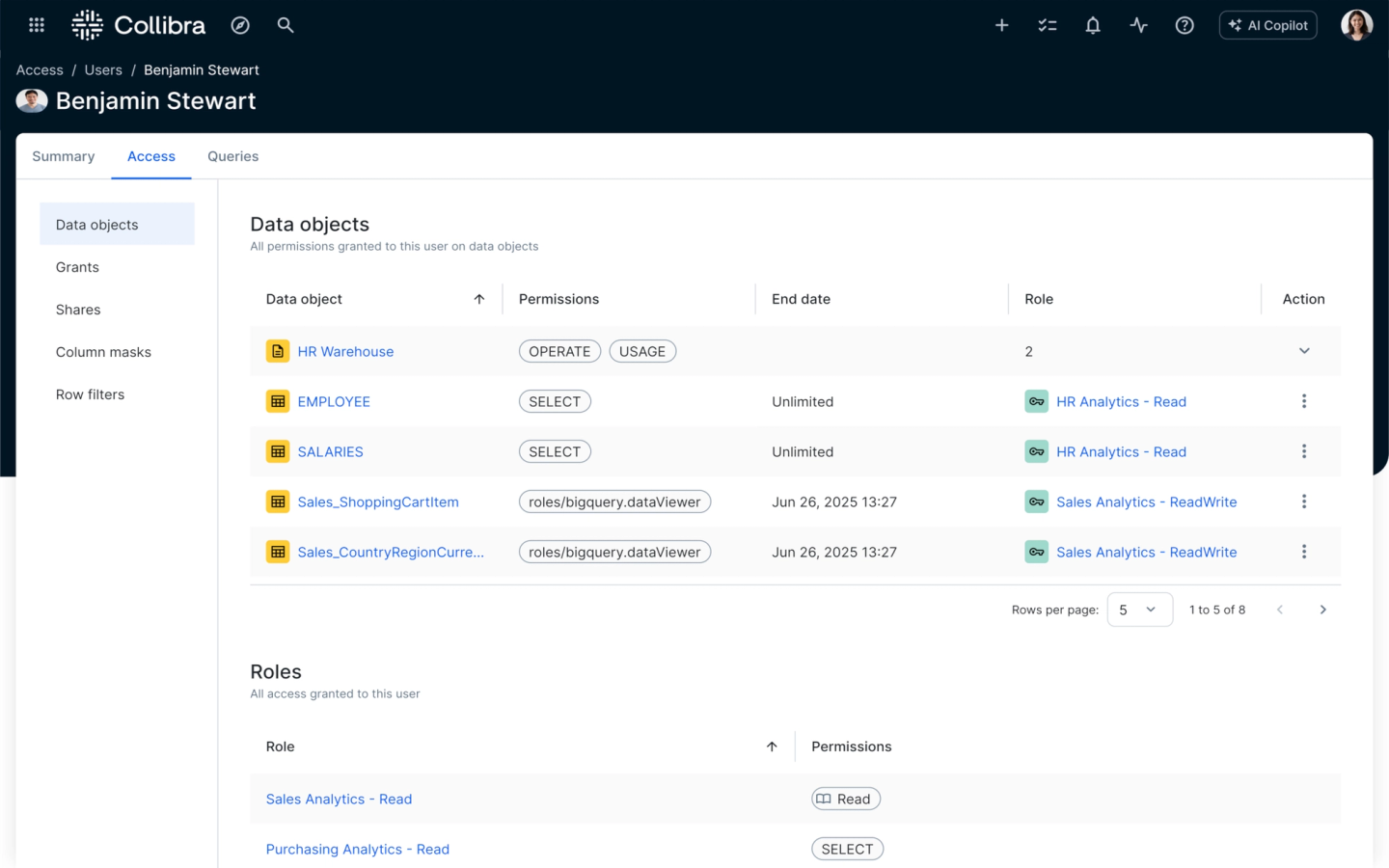
    Provide the right level of access through role-based controls that protect sensitive data and support regulatory requirements
  • Reduce friction in data access
    Let data consumers intuitively request and receive access, reducing delays and helping them act on data faster

Protect sensitive data with confidence

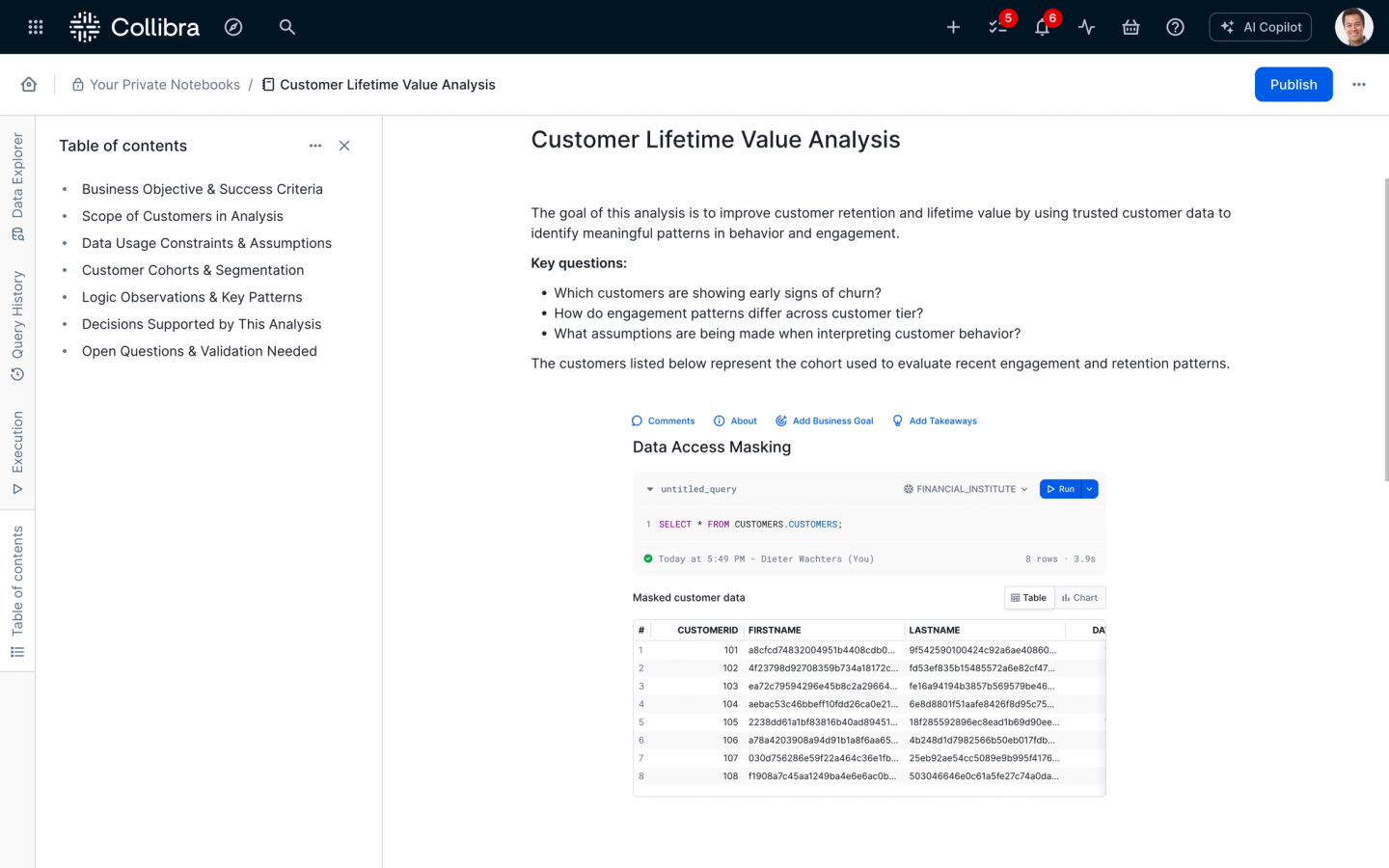
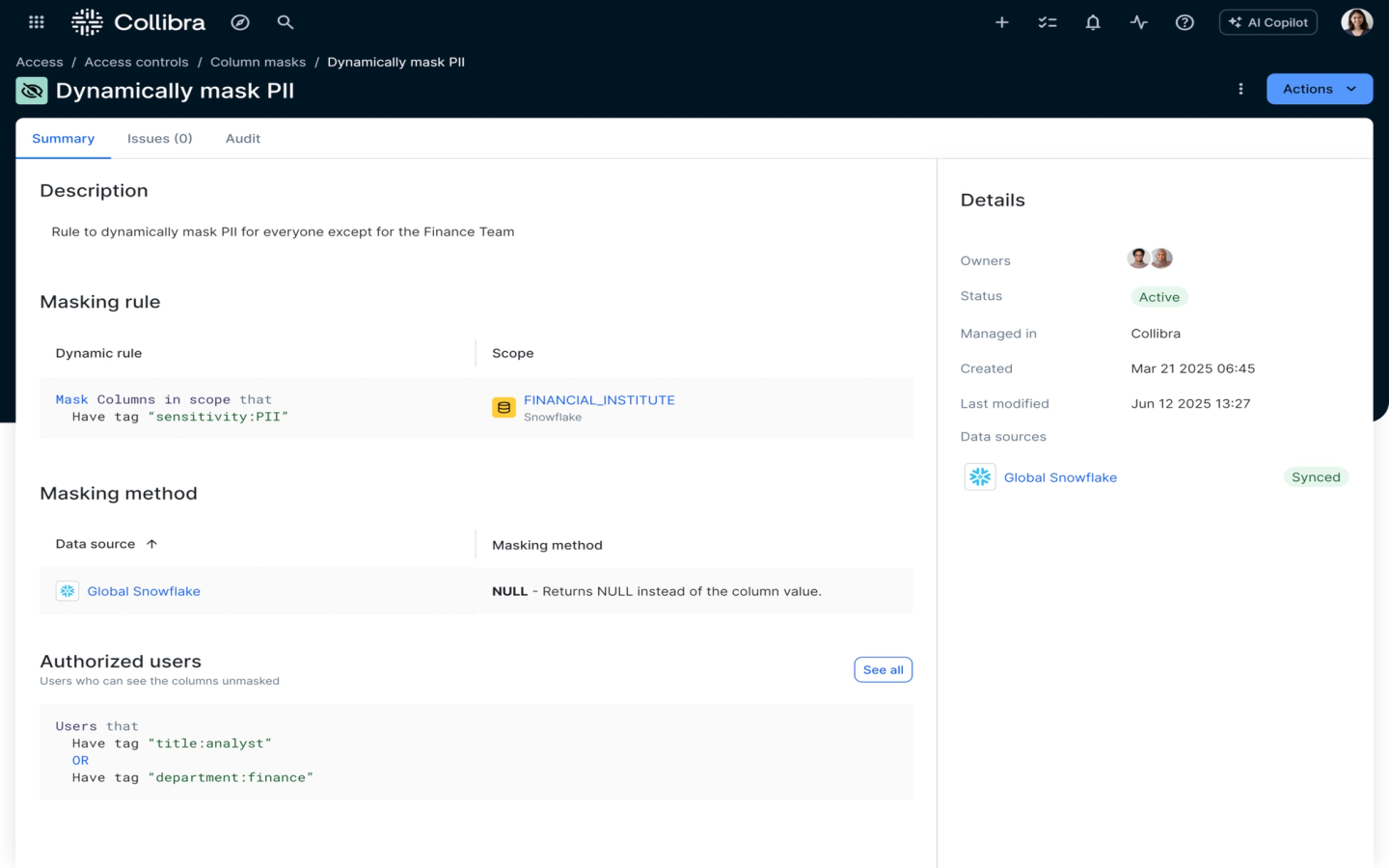
Protect sensitive data and support compliance without slowing teams down or requiring data owners to create separate views for user groups.

  • Limit sensitive data risks
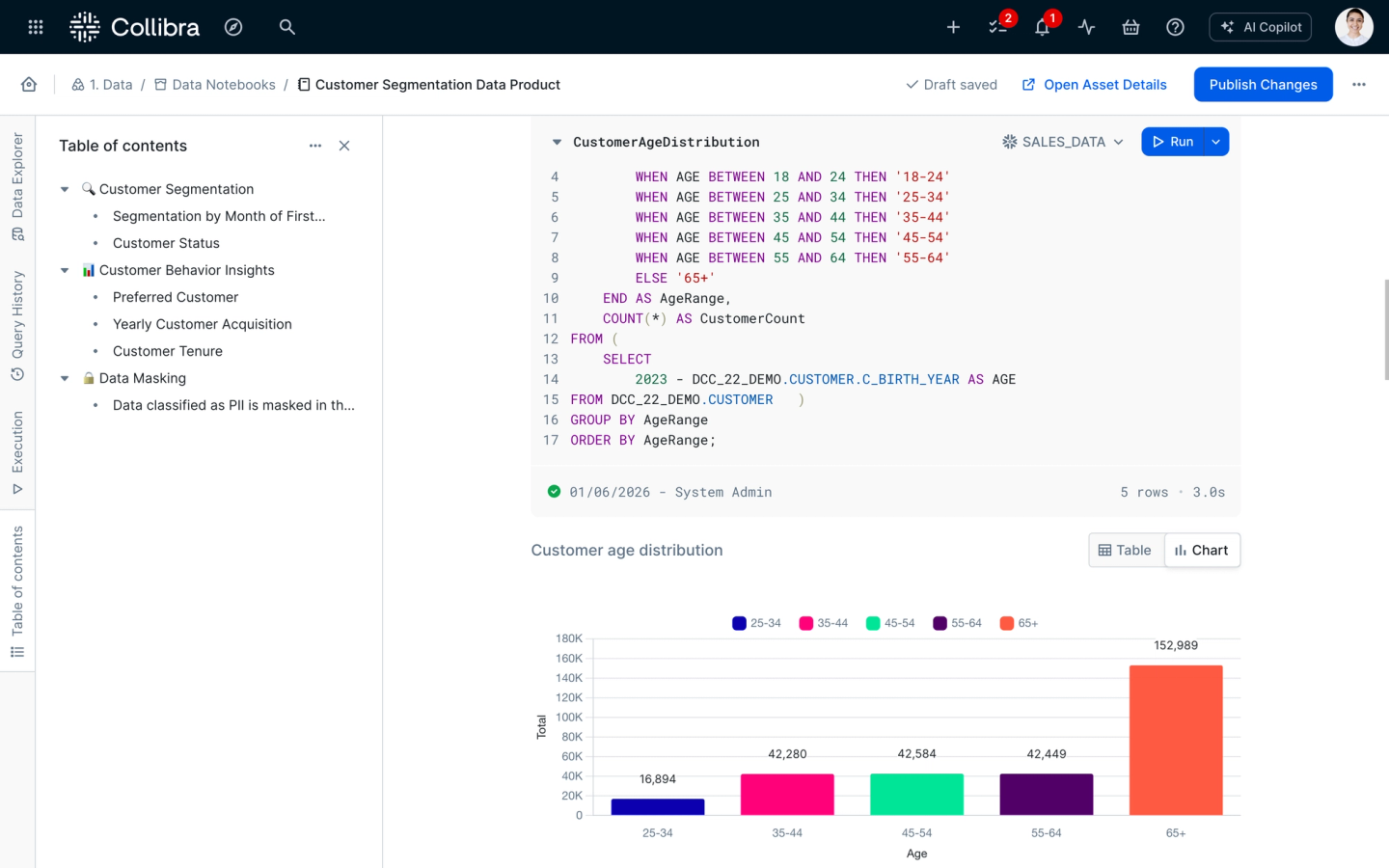
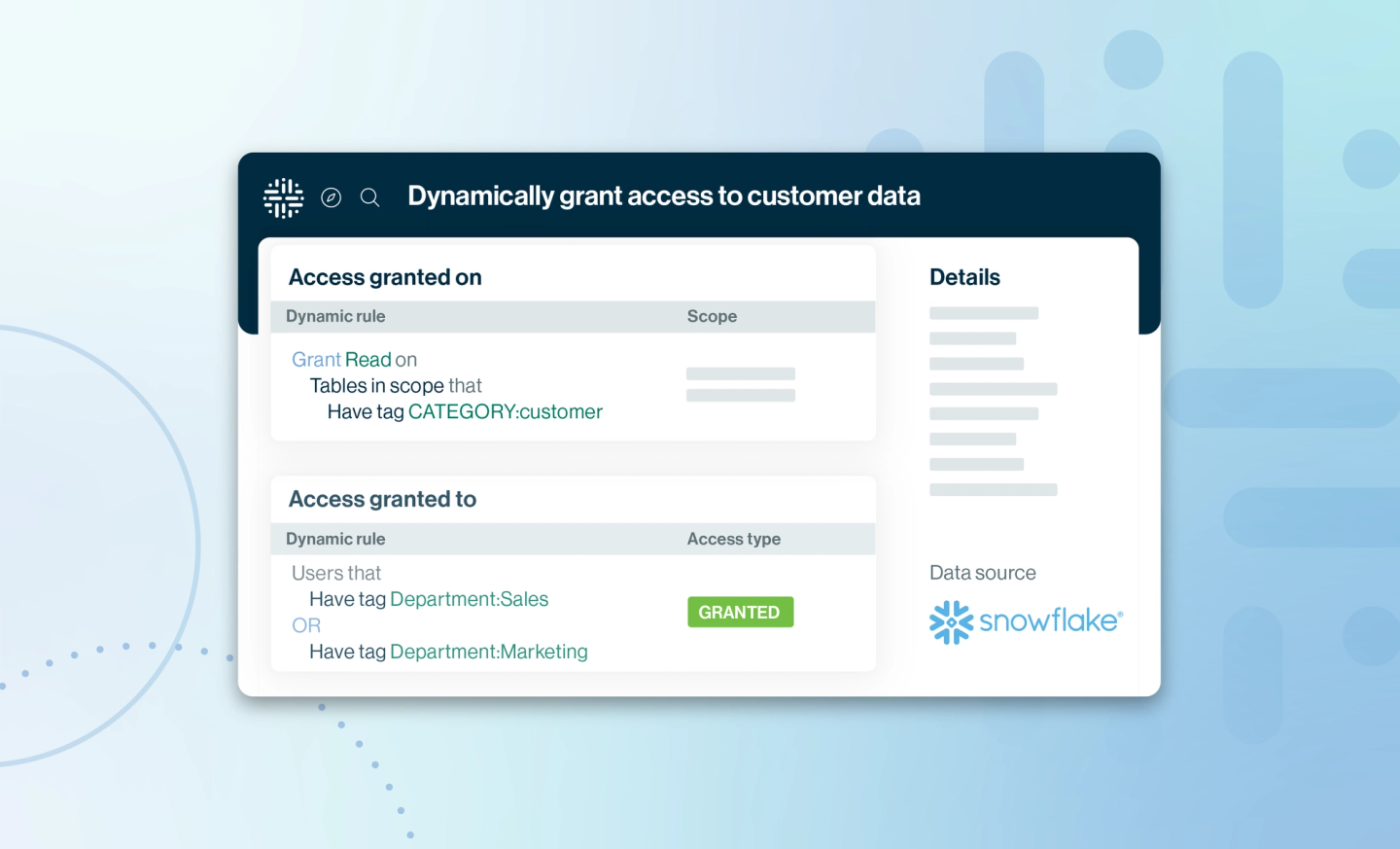
    Mitigate risk and protect privacy by masking sensitive data fields based on user roles or access purpose
  • Provide the right users with the right data
    Reduce unnecessary exposure with row filtering so users see only the exact subsets of data needed for their tasks

Learn how to empower self-service access to data without sacrificing control

Learn. Grow. Be inspired.

From expert insights to guided learning paths and in-depth product resources, we make it easy for every Data Citizen to use data.

Consistently recognized as a leader, setting the standard for what’s next

Frequently asked questions

What is data access governance?

Data access governance is the practice of defining, enforcing and monitoring who can access which data, under what conditions, and how that access is audited. Its goals are to protect sensitive data, satisfy regulatory requirements, and prevent unauthorized access and data breaches — without slowing the teams that need data to do their work.

What is data access control?

Data access control is the set of methods used to regulate who can view and use specific data in a database or IT system. It is a core component of data access governance, ranging from straightforward measures like multi-factor authentication to granular, role-based rules that determine exactly which records and columns each user can see.

The most common models are role-based access control (RBAC), which grants access based on a user's role, and attribute-based access control (ABAC), which grants access based on attributes such as department, location or data sensitivity. Both are typically applied under the principle of least privilege — giving each user access to only the data they need to do their job, and nothing more.

How is data access governance different from identity and access management (IAM)?

IAM manages identities by verifying who a user is and controlling how they authenticate. Data access governance manages what those authenticated identities can actually reach at the data layer, and whether that access is appropriate and monitored. The two are complementary. IAM confirms the identity, while data access governance decides what that identity is allowed to do with sensitive data. Collibra Data Access integrates with IAM through Microsoft Entra ID and Okta for identity verification.

How does data access governance support AI initiatives?

Data access governance builds a trusted foundation for AI by making sure that models, agents, and the people building them only draw on data they are authorized to access. Applying consistent access policies, masking, and filtering across every source lets teams safely power analytics and generative AI while keeping sensitive data protected and preserving the audit trail regulators expect.

The road to Data Confidence starts here.